
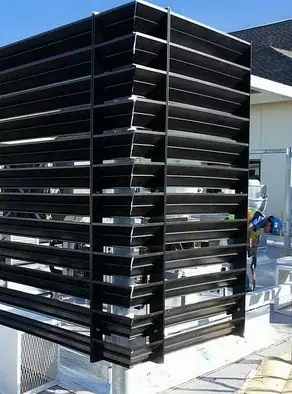
Screens for the Rest of the Mechanical Equipment
Sharchs fabricates custom aluminum screens for generators, transformers, switchgear, pumps, backflow preventers and the service yards that hold them. These are usually ground-level enclosures beside the building or in a corner of the parking lot, and they have to hide the equipment without blocking airflow, utility access or emergency service. We build them in our Fort Worth shop. Send a site plan and equipment list and we return a firm bid within 2 business days. Upload your plans for a bid.
If your project is mostly rooftop units and condensers, start with our HVAC equipment screens page instead.
Mechanical Equipment We Screen
- Standby generators: Diesel and natural gas units on pads, often with a sub-base fuel tank.
- Pad-mounted transformers and switchgear: Utility and owner-side electrical equipment that design review boards rarely want visible from the street.
- Pumps and backflow preventers: Fire pump, domestic water and irrigation equipment.
- Meter banks and gas regulators: Common on multifamily and retail buildings.
- Mechanical service yards: Several pieces of equipment grouped behind one continuous screen wall.
What Makes a Mechanical Screen Different
A ground-level mechanical screen is judged by different people than a rooftop HVAC screen. The utility company, the fire marshal and the facilities crew all have a stake in it, and each one can reject a layout that looks fine on the architectural elevations.
Utility clearances and access
Electric and gas utilities set their own rules for working space in front of transformers, switchgear and meters, and for truck access to replace them. Those rules vary by utility. Get them before the screen line is drawn. A screen that has to be moved after the utility inspects it is an expensive fix.
Generator airflow and exhaust
Generators push a large volume of hot air off the radiator and discharge exhaust that has to clear the enclosure. The generator manufacturer’s clearances and the local fire and building codes set how close the screen can be. Louvered panels keep more open area than solid ones and are usually the better fit.
Access for service and emergencies
Plan access wherever a technician, fuel truck or fire crew needs to get in. We fabricate gates and removable panel sections that match the screen, so access points do not stand out. Think about equipment replacement too. A removable section lets a crew swap a transformer or generator without cutting the screen apart.
Foundations and site work
Ground screens sit on footings or on the equipment pad, and the foundation design belongs to the project’s structural engineer. Underground utilities, grading and drainage around the yard all affect where posts can go. Rooftop vs. ground-mounted screens covers these differences in more detail.
Traffic and landscaping
A yard next to a drive aisle or parking stalls may need bollards or setbacks, which are separate from the screen itself. Where the screen is near plantings, leave room so vegetation does not block the louvers or rub the finish.
Noise Is a Separate Problem
A louvered aluminum screen hides equipment. It does not meaningfully reduce noise. If a generator or chiller has to meet a sound limit at the property line, that calls for an acoustic enclosure or wall designed for the purpose. We would rather tell you that now than have the screen blamed for a noise complaint later.
One Look From Roof to Ground
Many buildings have HVAC screens on the roof and a mechanical yard at ground level. Using the same panel style and finish in both places makes the equipment read as part of the architecture. We can build both from one bid, with each assembly detailed for its location. Our rooftop equipment screens page covers the roof side.
Finishes
Standard finish is architectural powder coat. Kynar, anodized and wood-grain finishes are available. They cost more and can add time to the schedule, so flag them at bid time.
How the Job Runs
- Send the site plan and equipment list.
- Firm bid within 2 business days.
- Submittals within 7–10 business days of award.
- Production in 8–10 weeks after approved submittals.
- We install in Texas, Oklahoma, Louisiana, Arkansas and New Mexico, and ship fully fabricated anywhere else.
Get a Bid on Your Mechanical Screens
Have a generator, transformer or service yard that needs screening? Upload your plans for a firm bid in 2 business days, or call (817) 725-8164.
Last updated
Aluminum Mechanical Equipment Screens: FAQs
Can you screen a utility transformer?
Often, yes, but the electric utility controls the rules. Most utilities set required clearances and access in front of the transformer doors and for truck access. Get the utility's requirements before the screen is laid out, and we will build to them.
Do aluminum screens reduce generator noise?
Not in any meaningful way. A louvered aluminum screen is a visual screen, not a sound barrier. If the project has a noise limit, the generator needs a sound-attenuated enclosure or an acoustic wall designed for that purpose.
How do you handle generator exhaust and radiator airflow?
The screen layout has to keep the radiator discharge and exhaust path open and away from the panels. The generator manufacturer's clearances and the local fire and building codes set the distances. We size the enclosure to the layout the engineer approves.
What finishes are available for mechanical yard screens?
Architectural powder coat is standard. Kynar, anodized and wood-grain finishes are available at added cost and can lengthen the schedule. A matching finish lets a ground-level yard screen tie into the building and any rooftop screens.
What do you need to bid a mechanical yard screen?
A site plan showing the equipment and the screen line, the equipment list with dimensions, the screen height, where access openings go, and the finish. With that, we return a firm bid within 2 business days.