
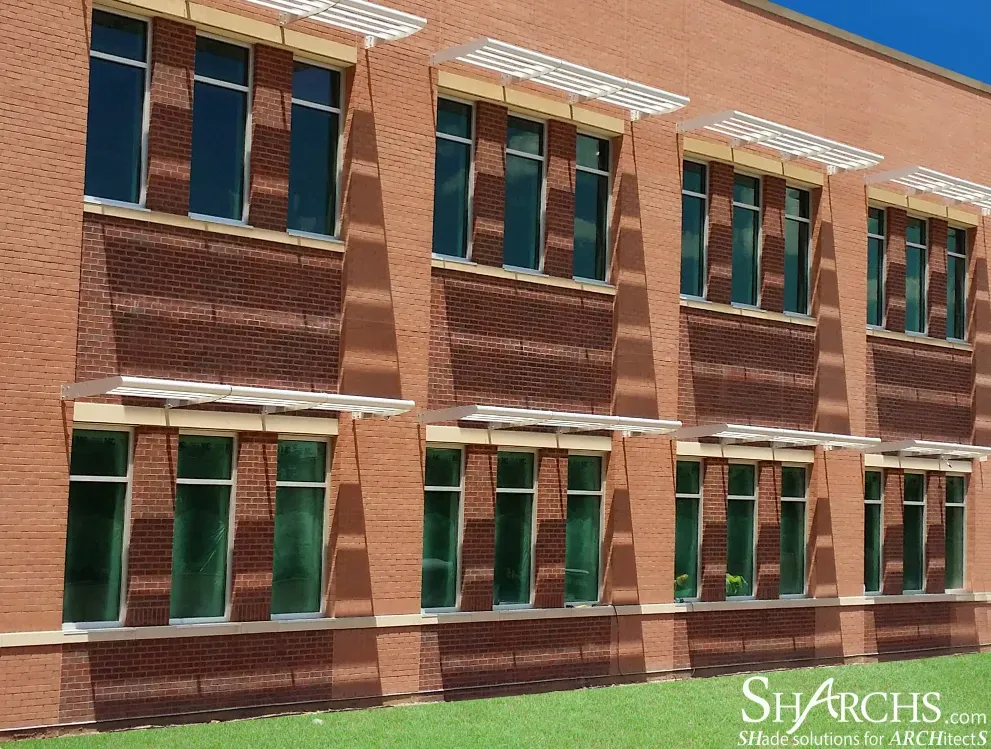
Stopping Heat Before It Enters the Building
Commercial buildings face a constant challenge: managing the effects of sunlight. While natural light is desirable in offices, schools, healthcare facilities, and retail spaces, excessive solar exposure can create uncomfortable indoor environments and place additional demands on building systems.
This is why architects frequently incorporate sunshades into commercial projects. When people ask, “How do architectural sunshades reduce building heat gain?” the answer is surprisingly straightforward. Architectural sunshades work by blocking a significant portion of the sun’s rays before they reach the building envelope, helping reduce the amount of heat that enters through windows and glass facades.
At Sharchs, we fabricate custom aluminum architectural sunshades that help commercial buildings better manage solar exposure while enhancing the appearance of the structure.
Understanding Solar Heat Gain
Before exploring how sunshades work, it is important to understand what heat gain actually means.
Solar heat gain occurs when sunlight passes through glass and transfers heat into a building. Large windows and expansive curtain wall systems allow natural daylight to enter interior spaces, but they can also become pathways for unwanted heat.
As sunlight strikes glass surfaces throughout the day, temperatures inside the building may rise. This effect is often most noticeable in buildings with significant southern or western exposure where sunlight remains intense for extended periods.
The more solar heat that enters a building, the harder cooling systems must work to maintain comfortable conditions.
Why Exterior Shading Is More Effective
One of the most important concepts in commercial building design is that preventing heat gain is often more effective than managing it after it occurs.
Interior blinds and shades can help reduce glare, but they typically address sunlight after it has already passed through the glass. At that point, a significant amount of solar energy has already entered the building.
Architectural sunshades take a different approach. Because they are installed on the exterior of the building, they intercept sunlight before it reaches windows and glass surfaces. By stopping a portion of solar radiation outside the building envelope, less heat enters the interior environment.
This proactive strategy is one reason exterior shading systems remain a popular solution in commercial architecture.
Managing Sunlight Based on Building Orientation
Not every side of a building receives the same amount of sunlight. East-facing facades experience strong morning sun, while western elevations often encounter intense afternoon exposure. Southern-facing walls may receive sunlight for much of the day depending on geographic location.
Architectural sunshades can be designed specifically to address these varying conditions.
Horizontal sunshades are commonly used on elevations where the sun is positioned higher in the sky. Vertical fins may be utilized on facades that receive lower-angle sunlight during morning or afternoon hours. Some projects incorporate a combination of shading elements to provide coverage where it is needed most.
This customized approach allows architects to create targeted solutions rather than applying a one-size-fits-all strategy.
Protecting Large Glass Areas
Modern commercial architecture frequently relies on glass to create open, bright, and visually appealing spaces. Curtain wall systems, storefront glazing, and floor-to-ceiling windows have become common features in office buildings, educational facilities, healthcare campuses, and mixed-use developments.
While glass offers numerous benefits, it can also contribute to increased solar heat gain if not properly managed.
Architectural sunshades help protect these large glazed areas by reducing the amount of direct sunlight striking the glass. This helps maintain the benefits of natural daylight while minimizing some of the challenges associated with extensive glazing.
For architects, this creates an opportunity to preserve design intent without sacrificing occupant comfort.
Improving Occupant Comfort Throughout the Day
Heat gain impacts more than building systems. It directly affects the people working, learning, shopping, and visiting inside commercial properties.
Areas exposed to intense sunlight often experience temperature fluctuations that create uncomfortable conditions. Occupants seated near windows may notice excessive warmth during certain parts of the day, even when the rest of the building remains comfortable.
Architectural sunshades help create a more consistent indoor environment by reducing solar exposure at the source. This can lead to spaces that feel more balanced and comfortable throughout the day, regardless of exterior conditions.
Creating a More Efficient Building Envelope
Building envelopes are designed to separate indoor and outdoor environments while supporting overall building performance. Every component of the exterior contributes to how effectively that envelope functions.
Architectural sunshades act as an additional layer of protection that helps manage environmental conditions before they impact the building interior. By limiting direct solar exposure, they support a more effective facade system while complementing other architectural elements.
As building owners seek ways to improve operational efficiency and occupant satisfaction, exterior shading systems continue to play an important role in modern design strategies.
Why Aluminum Is Ideal for Sunshade Applications
Material selection matters when designing exterior shading systems. Aluminum remains one of the most popular choices because it combines durability, strength, and design flexibility.
Its lightweight nature allows architects to create bold architectural features without excessive structural demands. Aluminum also resists corrosion and performs well in a wide variety of climates, making it suitable for long-term commercial use.
Custom fabrication capabilities allow aluminum sunshades to be tailored to specific building requirements, helping architects achieve both performance and aesthetic objectives.
Partner with Sharchs for Custom Architectural Sunshades
Architectural sunshades reduce building heat gain by stopping sunlight before it reaches windows and glass facades. This simple yet effective strategy helps create more comfortable interior spaces while supporting the overall performance of commercial buildings.
At Sharchs, we specialize in custom aluminum architectural sunshade systems designed to meet the unique needs of architects, contractors, developers, and property owners. Our solutions are engineered to complement modern commercial architecture while providing lasting durability and visual appeal.
Contact Sharchs today to learn how custom architectural sunshades can help improve the performance and appearance of your next commercial project.
Factors That Influence Potential Energy Savings
Not every aluminum sunshade system will deliver the same level of performance. The projection, blade angle, spacing,g and placement determine how much sunlight the system blocks. A sunshade that works well on a south-facing elevation may not provide the same results on the east or west side of the building.
Window size and glazing performance also affect the outcome. Buildings with large glass surfaces or older windows may experience different benefits than structures with high-performance glazing. Local climate, seasonal sun angles, occupancy patterns, and HVAC efficiency should also be considered when evaluating potential energy savings.
Project teams can use energy modeling and solar studies to estimate how a proposed shade system may affect building performance. These tools help architects and engineers select a configuration based on measurable project conditions instead of applying the same design to every elevation.
Last updated
Frequently asked questions
How do architectural sunshades reduce building heat gain?
Architectural sunshades block a significant portion of direct solar radiation before it hits windows and glass facades. By intercepting sunlight on the exterior, they prevent heat from entering the building envelope in the first place.
Why is exterior shading more effective than interior blinds?
Interior blinds and shades manage sunlight after it has already passed through the glass, by which point solar heat has already entered the building. Exterior sunshades stop solar radiation outside, making them significantly more effective at controlling interior temperatures.
How does building orientation affect sunshade design?
Different sides of a building face varying sun angles throughout the day. Horizontal sunshades are typically used on southern facades where the sun is higher in the sky, while vertical fins are ideal for eastern and western facades exposed to lower-angle morning or afternoon sun.
Why is aluminum commonly used for architectural sunshades?
Aluminum is lightweight, strong, corrosion-resistant, and highly durable across diverse climates. Its fabrication flexibility allows custom designs tailored to structural and aesthetic requirements without imposing heavy loads on the building frame.
What types of commercial properties benefit from custom sunshades?
Any commercial structure with large glass areas or curtain wall systems, such as office buildings, educational facilities, healthcare campuses, retail centers, and mixed-use developments, can benefit from improved occupant comfort and better envelope performance.