Architectural Equipment Screens
Are you a facility manager, procurement manager, mechanical engineer, construction contractor or architect involved in commercial or industrial building construction or maintenance? Mechanical equipment screens, also called louvered screens, can play an important role in improving the facility’s aesthetics and longevity.
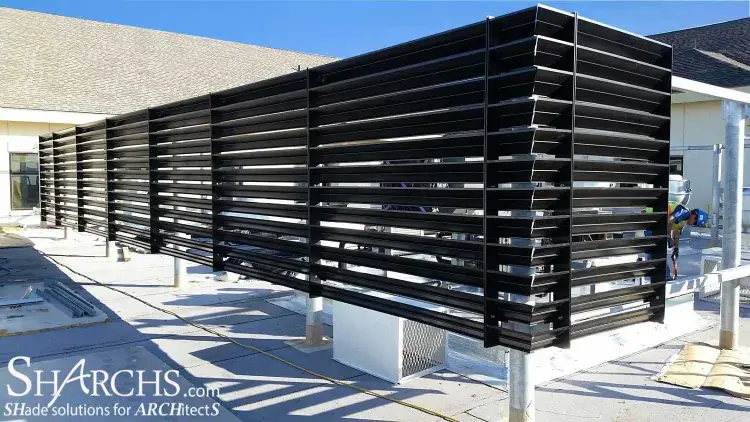
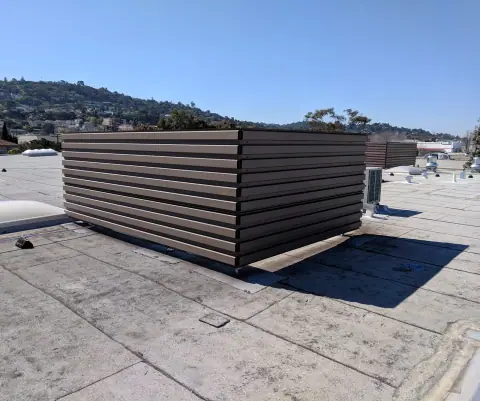
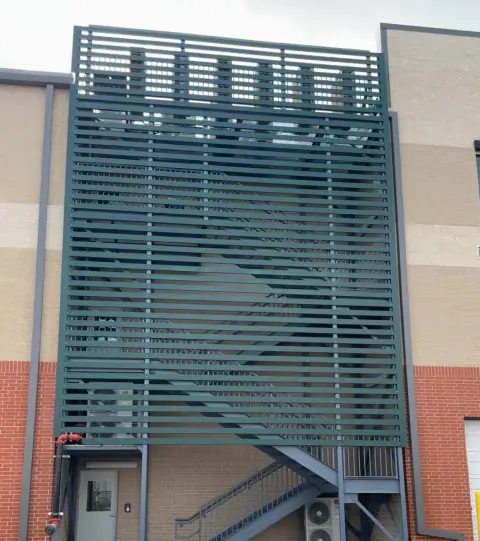
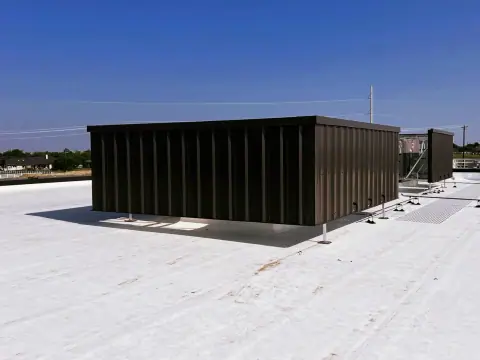
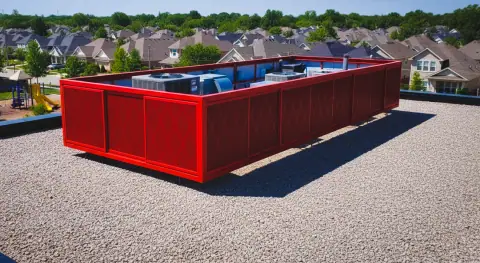
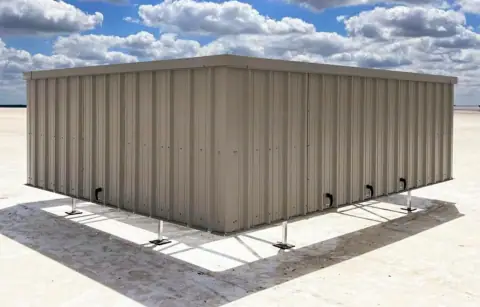
These uniquely designed HVAC screens create a visual barrier that keeps unattractive HVAC units and other mechanical machinery and systems out of sight. They also protect the equipment from extreme weather. Mechanical screens perform equally well for ground or rooftop equipment screening purposes on all types of commercial and industrial buildings.
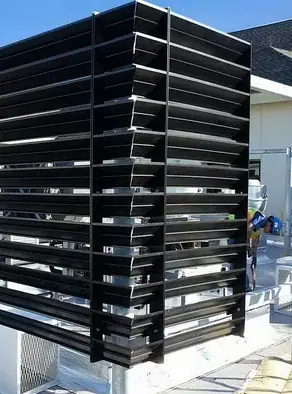
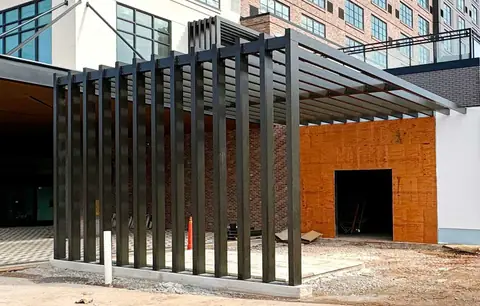
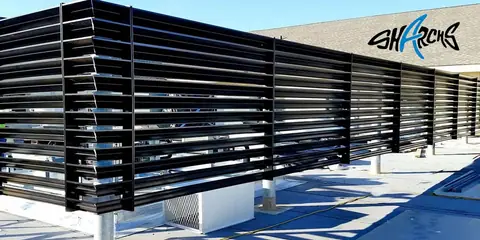
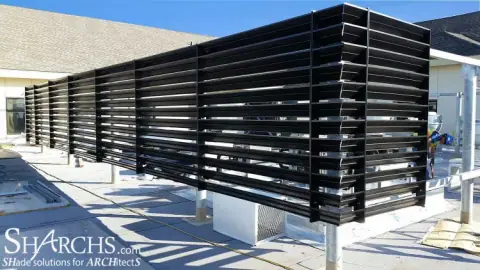
Sharchs Corporation offers aluminum equipment screen designs for various commercial applications. Many of these designs consist of inverted horizontal louver blades made from premium-grade aluminum attached to vertical support posts, creating the exact configuration you need to conceal your rooftop equipment. We also offer full customization capabilities to meet your project’s specific screening requirements.
Why Do Buildings Need Mechanical Equipment Screens?
Commercial buildings may need these louvered mechanical equipment screens for devices that support HVAC systems, waste management, water supply and other mechanical equipment for several reasons. They help businesses promote a more favorable image and enhance customer appeal by concealing these items from public view. The screens also protect expensive mechanical machinery from severe weather, vandalism, animal and pest invasions and other hazards without blocking airflow.
Additionally, some municipalities have developed and implemented building codes requiring the concealment of various mechanical equipment types. Installing HVAC screens can help businesses avoid costly noncompliance fines.
Types of Aluminum Equipment Screens
Many mechanical equipment screen system designs are entirely customizable to a specific application. Several examples of the most popular base panel styles include:
- Solid screens: Solid equipment screens obstruct visibility and create vision barriers from every angle.
- Semi-private screens: These designs limit visibility while providing the appropriate ventilation.
- Alternating screens: Alternating panel styles ensure proper ventilation and concealment while creating a sleek, modern look.
- Louvered screens: Louvered equipment screen systems consist of panel styles slightly angled to allow airflow with limited visibility.
Benefits of Rooftop Screens for HVAC Equipment
Some of the benefits mechanical equipment screens offer for rooftop or ground applications include:
- Aesthetic appeal: These screens keep mechanical equipment from becoming an eyesore that detracts from a commercial property’s appearance.
- Protection: Rooftop screening equipment can help prevent damage from conditions like rain, wind and hail.
- Compartmentalization: Screens can separate mechanical systems and equipment, creating more privacy.
- Airflow: Mechanical equipment screens conceal machinery without inhibiting airflow or sunlight exposure.
- Strength: Screens could enhance a commercial or industrial building’s structural integrity.
- Compliance: Screens can help construction professionals, building owners and facility managers adhere to building codes and regulations.
Preconstruction for Aluminum Equipment Screens
At Sharchs, our expertly crafted products are designed to be easy to install — but integrating an aluminum equipment screen begins long before installation. Proactive planning is key. We work with you, providing site-specific recommendations and technical/why-you-need-aluminum-equipment-screens-planned-in-pre-construction/ specifications for our screens to ensure your structural engineer can design the necessary infrastructure during the preconstruction phase.
Skipping this step could result in costly delays or screens that don’t hold up against wind loads. Contact your structural engineer early and make sure the support system is part of your initial plans. Sharchs will not:
- Cut through your existing roof structures.
- Make modifications to the support structure.
- Connect screens directly to the equipment.
We strongly advise early collaboration with your architects, structural engineers and general contractors, as you will need a robust support system. This typically consists of steel tubes or footer posts designed to safely bear the screen’s weight and withstand environmental factors, including all applicable wind loads.
Once those are in place, installation is simple. Our installation tabs make it easy to attach the prefabricated screen sections to the support structures. After installation, the screens form a clean, continuous line — no gaps and no fuss.
Advantages of Partnering With Sharchs for Rooftop Equipment Screens
When you choose Sharchs Corporation for your commercial projects, you can expect high-quality products that exceed your expectations. We are committed to providing practical, cost-effective solutions that meet your needs and fit your budget, with rooftop equipment screen cost options for projects of all sizes. We back every product with exceptional service to maximize your customer experience.
In addition to our stock offerings, we can custom-manufacture a mechanical screen system according to your equipment screening requirements. Because we manufacture our components in the United States, our lead times are significantly shorter than companies that rely on overseas suppliers for parts and assembly.
While Sharchs does not offer structural engineering for the screen supports, our team can provide crucial design and engineering advice, along with technical expertise on architectural integration.
Why Airflow Matters Around HVAC Equipment
HVAC equipment needs space to move air.
Placing a poorly designed solid barrier too close to a mechanical system can restrict ventilation and potentially create performance problems. Rooftop screening therefore needs to balance concealment with airflow.
Louvered aluminum systems are often a practical solution.
The angled blades limit visibility while maintaining openings that allow air to move through the screen. This creates a more finished appearance without simply boxing the HVAC system into an enclosed space.
Sharchs offers several equipment screen configurations, including louvered, semi-private, alternating, and solid styles. Systems can be customized based on the project’s visibility and ventilation needs.
Meeting Commercial Screening Requirements
Rooftop mechanical equipment may also be subject to local zoning or architectural requirements.
Some municipalities require equipment to be concealed from streets, neighboring properties, or other public areas.
Requirements vary by location, so the project team should review the applicable building and zoning standards early.
A custom rooftop screen can then be designed around those requirements as well as the physical conditions of the building.
Upgrade Your Building’s Exterior with Tailored Aluminum Equipment Screens
If you’re looking for a reliable architectural equipment screen and sunshade supplier, Sharchs Corporation is here for you. Reach out to us early in your preconstruction phase to leverage our product expertise and to ensure your equipment screens are perfectly integrated.
Discover why so many builders rely on our products for high-quality and cost-effective solutions. Contact us online to get started.
Last updated
Aluminum Equipment Screens for Commercial Buildings: FAQs
What is the best material for an HVAC rooftop screen?
Aluminum is a strong option for commercial rooftop screens because it is lightweight, corrosion-resistant, durable, and easy to fabricate into custom louvered or solid configurations.
Do rooftop screens restrict HVAC airflow?
A properly designed system should maintain the ventilation required by the HVAC equipment. Louvered screens are commonly used because they can conceal mechanical systems while allowing air to move through the panels.
When should rooftop equipment screens be planned?
Whenever possible, screens should be considered during preconstruction. Early planning allows structural supports, equipment locations, screen heights, and attachment points to be coordinated before the roof is completed.
Can HVAC rooftop screens be customized?
Yes. Sharchs can manufacture custom equipment screens based on project dimensions, visibility requirements, architectural goals, and ventilation needs.
Why are equipment screens required on commercial buildings?
Most local municipalities, zoning boards, and commercial architectural guidelines require equipment screens to hide unsightly rooftop HVAC systems, mechanical units, and utilities from public view. They also protect high-value equipment from storm damage and unauthorized access.
How do equipment screens maintain proper airflow for HVAC units?
Equipment screens are engineered using louvered blades, perforated panels, or strategically spaced architectural slats. This allows sufficient free air space for mechanical ventilation and heat dissipation while maintaining complete visual concealment from street level.
Why is extruded aluminum the best material for rooftop equipment screens?
Extruded aluminum offers lightweight strength, exceptional resistance to rust and corrosion, and low long-term maintenance requirements. It easily withstands wind loads and extreme weather without placing excessive structural weight on the building’s roof deck.
What customization options are available for Sharchs equipment screens?
Sharchs offers fully custom sizing, louver angle profiles, framing options, and custom color matching. Finishes include high-performance powder coatings, anodized finishes, and PVDF/Kynar® coatings designed to match your building’s exterior palette.
How do aluminum equipment screens conceal HVAC units without restricting airflow?
Equipment screens use engineered louver blades set at angled profiles (such as 30° or 45°). This angle blocks horizontal line-of-sight views from street level while leaving sufficient free open area for HVAC air intake and heat dissipation.
Why is aluminum better than steel or wood for rooftop HVAC screening?
Extruded aluminum is lightweight, highly resistant to rust and corrosion, and handles heavy wind loads without putting excessive weight on the roof deck. Unlike wood or steel, it will not rot, warp, or require frequent repainting.