Designed and Built in Fort Worth
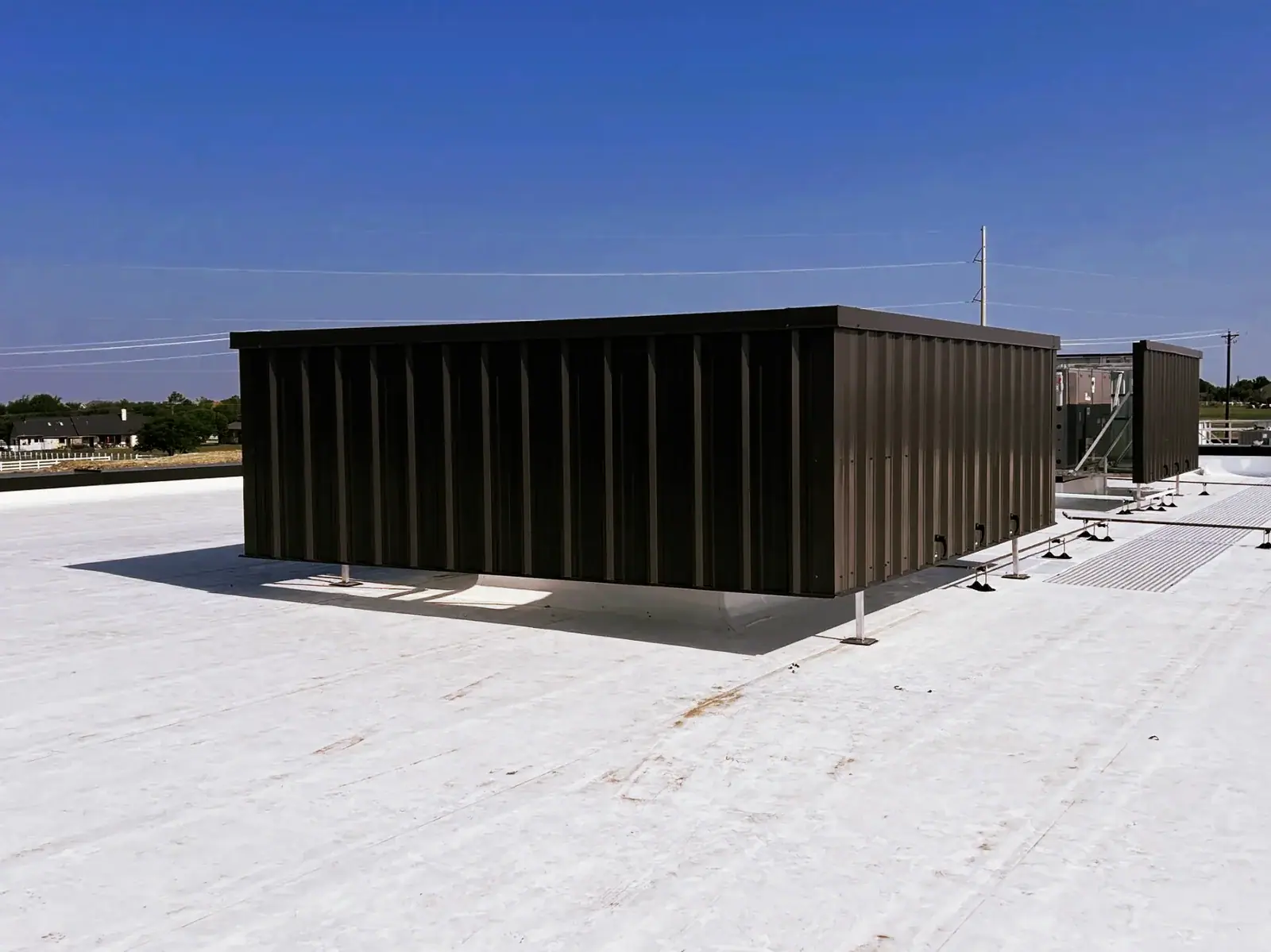
Sharchs designs, builds and delivers aluminum rooftop equipment screens from our Fort Worth shop.
Why Municipalities Require Rooftop Equipment Screening
Many zoning codes and design review boards now mandate that rooftop mechanical equipment be concealed from public view, particularly in mixed-use developments, urban infill projects, and anywhere a roofline is visible from the street or a neighboring property. The requirement isn’t just cosmetic: exposed RTUs, condensers and ductwork are also vulnerable to weather, debris and wildlife interference, all of which shorten equipment lifespan. A well-designed screen addresses the aesthetic requirement and the protective function in one structure.
Why Aluminum Outperforms Steel and Wood on a Rooftop
Steel screening rusts, especially where it’s exposed to standing water, condensation runoff from the units themselves, and constant UV exposure, and wood isn’t a serious option for an application that needs to last decades with minimal upkeep. Aluminum is naturally corrosion-resistant and lightweight relative to its strength, a meaningful advantage when structural load and anchoring points are already a consideration for the building’s engineers. Because rooftop units are bulkier, generate more heat, and need service access on multiple sides, a screen sized for a smaller piece of equipment like a single condenser won’t translate to an RTU footprint without adjusting panel height, spacing and access points. A solid enclosure traps heat and restricts the airflow HVAC equipment relies on to operate efficiently, so properly engineered louvered aluminum screens are sized specifically to the unit’s dimensions to balance visual concealment with the ventilation the mechanical system requires.
Common Use Cases
Rooftop HVAC screening comes up most often on multifamily developments, office buildings, hospitality projects, and healthcare facilities, all of which tend to have strict design review requirements and a high concentration of rooftop mechanical equipment. Property managers and HOAs also commission equipment screens during renovation projects, often after a code enforcement notice or a tenant complaint about visible units.
Custom Design Options for Commercial Rooftop Screening
At Sharchs, every rooftop screen system is custom-fabricated to meet specific site dimensions and structural requirements, offering options including:
- Panel Styles: Louvered blades, vertical or horizontal equipment slats, perforated panels, and continuous sight-line designs.
- Structural Mounts: Roof-penetrating posts, non-penetrating weighted bases, structural steel attachments, and curb-mounted configurations.
- Custom Finishes: Architectural powder coat, Kynar 500/PVDF coatings, custom color matching, and anodized finishes that blend with existing wall panels or masonry.
Last updated
Rooftop Equipment Screens: FAQs
Does an aluminum equipment screen restrict HVAC airflow?
No, when properly engineered. Louvered aluminum screens are designed with spacing that conceals the equipment from view while still allowing the ventilation HVAC systems need to operate efficiently.
How long do aluminum rooftop equipment screens last compared to other materials?
Aluminum resists rust and corrosion far longer than steel and requires none of the upkeep wood demands, making it a lower-maintenance, longer-lasting option for rooftop applications.
Can equipment screens be customized to match a building’s existing facade?
Yes. Sharchs custom-builds each screen’s height, panel spacing, and finish to coordinate with the building’s design and meet local screening requirements.
Do equipment screens help prevent wildlife damage to HVAC units?
Yes. Screening around rooftop equipment makes it significantly harder for birds and other animals to nest in or interfere with equipment housings and electrical connections.
Why is aluminum preferred over steel or wood for rooftop screening?
Aluminum is significantly lighter than steel—reducing structural roof loads—and will not rust or corrode. It is also far more durable and weather-resistant than wood, requiring zero ongoing staining or painting.
Can aluminum equipment screens withstand high wind loads?
Yes. Screens and their supports are designed for the wind loads and building codes at the project site. Site-specific engineering is available when a project needs it. If you need stamped calculations, tell us up front.