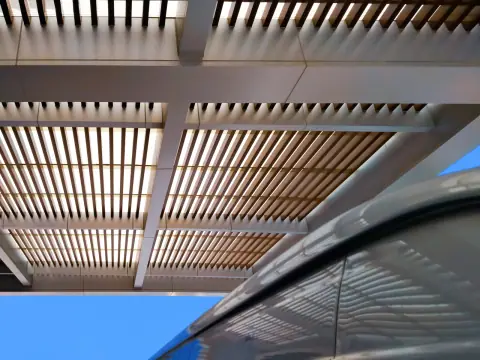
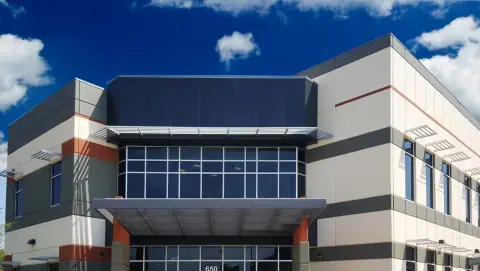
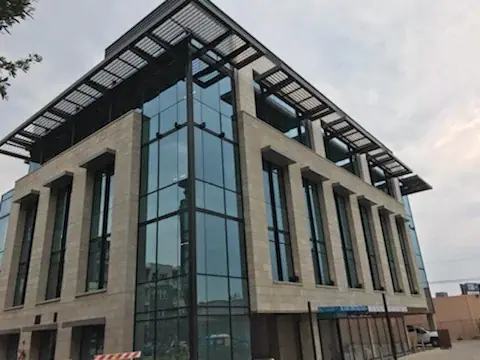
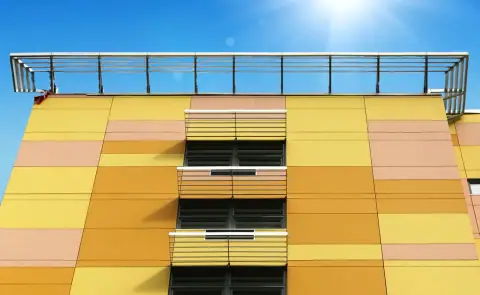
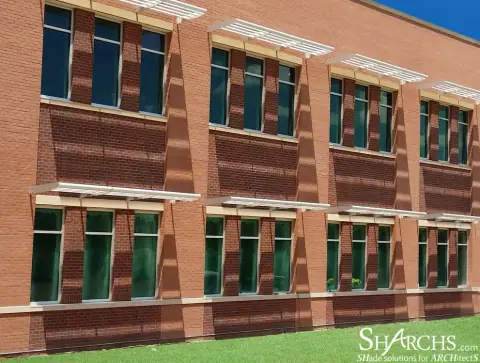
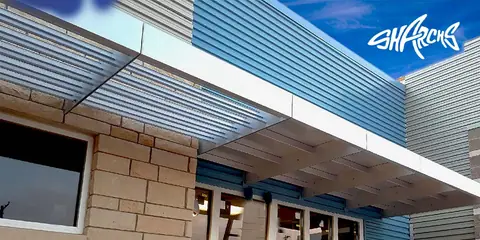
Benefits of Sharchs Aluminum Sunshades
Our aluminum canopies offer many advantages, including:
- Reduced building operating costs: Fewer sun rays penetrating the interior means lower utility bills. Incorporating shades into new constructions may allow for smaller HVAC systems for less capital spending.
- Savings on window treatments: Sunshades help prevent curtains and drapes from fading prematurely and needing more frequent replacement. They can also eliminate the need for other window treatments if desired.
- Aesthetics: Our metal canopies can help a building stand out with a unique exterior. Boost curb appeal and attract more attention with out various finishing options and blade profiles.
- Environmental friendliness: A cooler interior creates less need to run air conditioning. Aluminum is also 100% recyclable.
- Durability: Our metal canopies are long-lasting and corrosion-resistant. Plus, they require little maintenance.
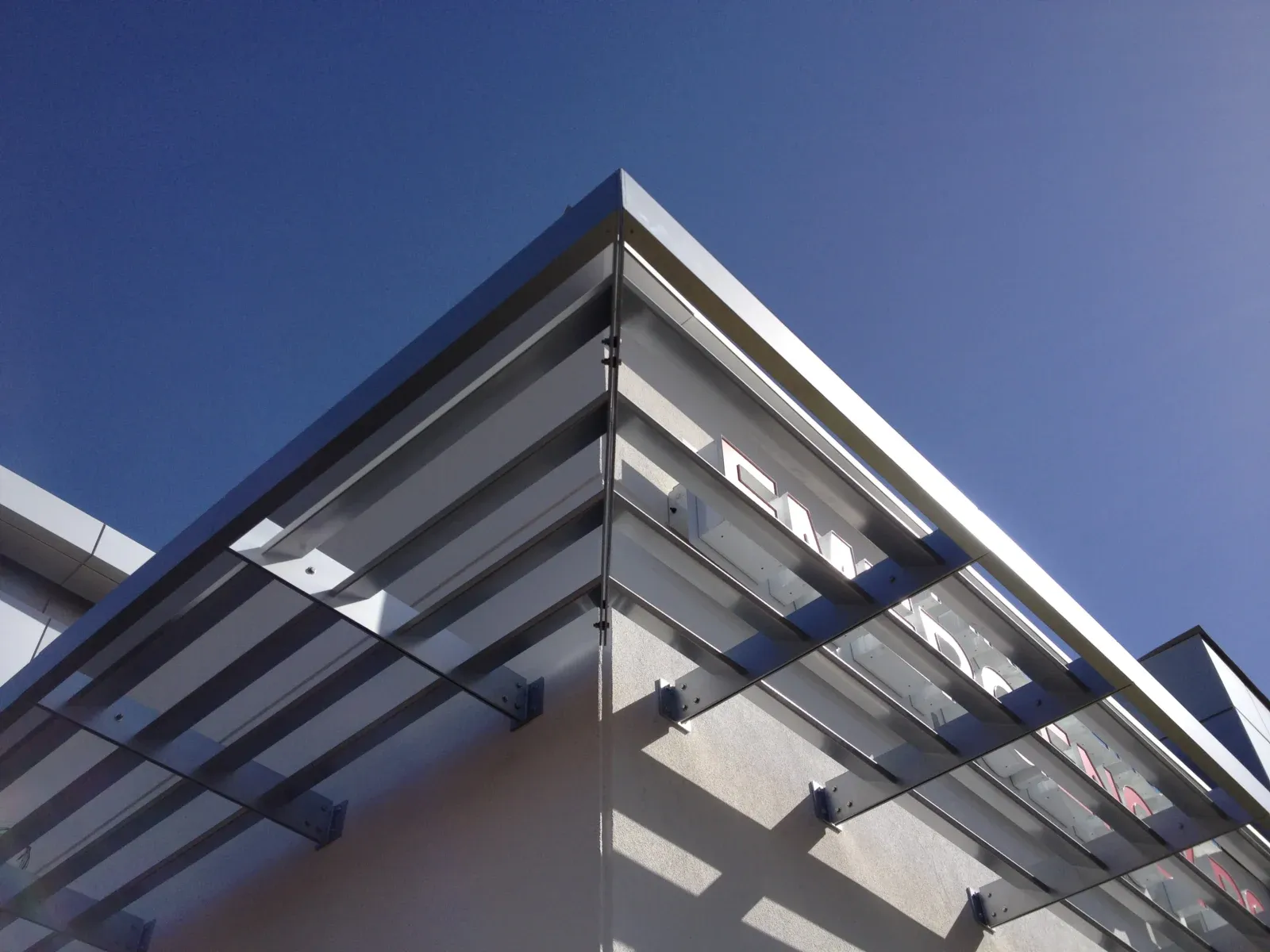
Why Sharchs?
Our customers have made us a leading aluminum sunshade manufacturer because:
- We’re customer service people: We know what it takes to separate a good customer experience from a great one. We also know how to create one.
- We’re problem-solvers: Every application calls for something unique. We design and manufacture one-of-a-kind solutions for those unique projects.
- We’re budget-friendly: We strive to provide products that fit our clients’ budgets. Our individualized attention to your needs doesn’t cost extra!
- Dependable lead times: Typical production is eight to 10 weeks after approval, with expedited production available.
- We keep our word: Customer satisfaction is always our goal. If we say we’ll do something, we follow through with it.
Managing Solar Heat Before It Reaches the Glass
One of the biggest advantages of exterior sunshades is their position.
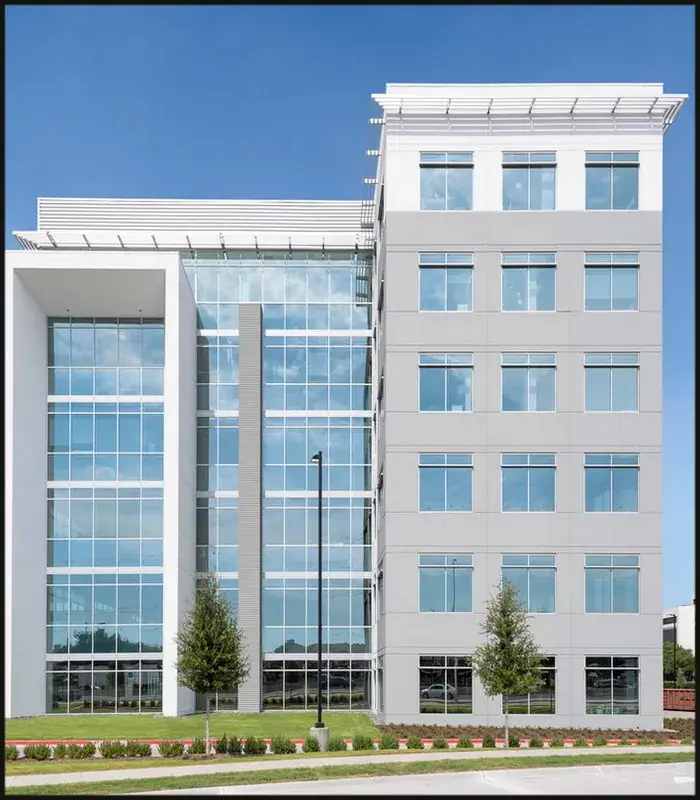
By intercepting direct sunlight outside the building, sunshades can reduce the amount of solar exposure reaching windows and curtain wall systems. This can support a more balanced indoor environment and help reduce unnecessary demand on cooling systems.
The effectiveness of the system depends on factors such as:
- Building orientation
- Window placement
- Sun angle
- Shade projection
- Blade spacing
- Blade orientation
- Surrounding structures
- Local climate conditions
There is no single sunshade configuration that works for every commercial facade. The system should respond to the building.
Horizontal vs. Vertical Sunshades
Orientation plays an important role in commercial sunshade design.
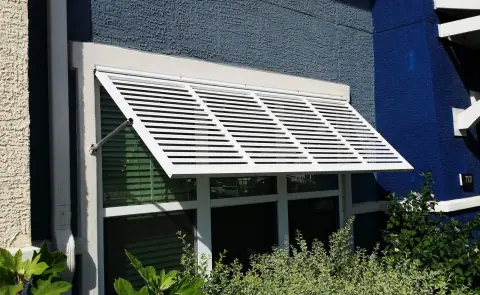
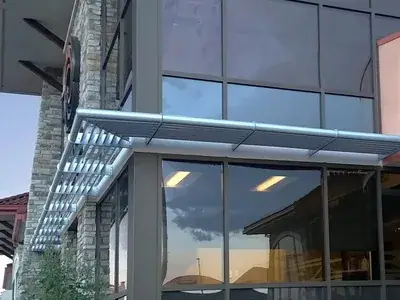
Horizontal sunshades are commonly used above windows and glazed sections. They can be especially useful when the goal is to reduce exposure from higher sun angles.
Vertical sunshades or fins address sunlight from a different direction. They may be useful where lower-angle sunlight creates glare or heat along certain elevations.
Some commercial projects benefit from combining the two approaches.
The goal is not simply to install more shade. It is to place the right amount of shade where it can provide the most value.
Key Specification Considerations
Before finalizing a sunshade design, project teams should evaluate:
- Solar orientation and shading analysis. Each facade gets different sun exposure, so blade depth and spacing should match the elevation.
- Wind loading. Sunshades are exposed structures and must be engineered for local wind loads under ASCE 7. Confirm this with your engineer of record.
- Attachment and structural support. Coordinate connection details with the building structure early.
- Finish and color. Specify a high-performance powder coat. Ask your manufacturer for the coating specification and warranty terms.
- Lead time. Custom fabrication takes time, so it should be on the schedule early.
For standard configurations, the Sunshade Designer has plan and section drawings (PDF and DWG), a Section 10 71 13 specification, a submittal sheet and a SketchUp model for each one.
The Benefits of Choosing American-Made Products
The decision to source architectural products domestically often provides benefits that many project teams overlook during the planning phase.
American manufacturing facilities operate under strict quality standards and established production processes. This level of oversight helps ensure that every component is fabricated according to project specifications and industry requirements.
When issues arise or project requirements change, domestic manufacturers can often respond more quickly than overseas suppliers. This flexibility becomes particularly valuable on complex commercial projects where adjustments are common.
For architects and contractors, access to direct communication with engineering and fabrication teams can simplify decision-making and reduce delays.
Request Your Personalized Quote Today
Since 2011, we’ve built high-quality American-made metal sunshades and canopies in Fort Worth, Texas. Sharchs is a one-stop solution for product design, fabrication and technical and engineering support.
Connect with us online for more information or a quote on your next aluminum canopy.
Types of Aluminum Sunshades
Since 2011, we have designed, built and delivered exterior aluminum sunshades of many kinds.
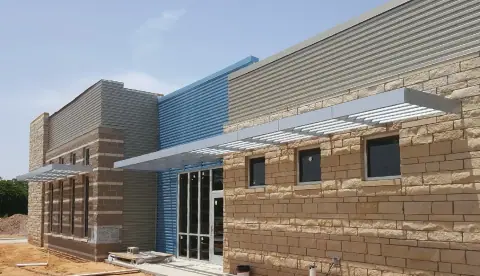
Cantilevered Aluminum Sunshades
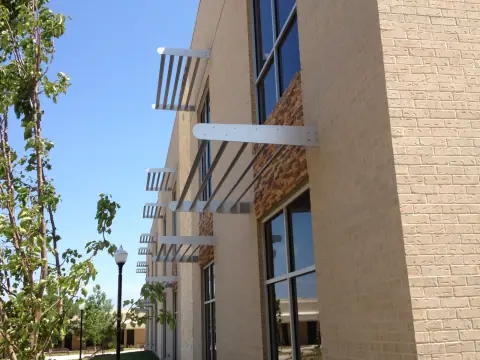
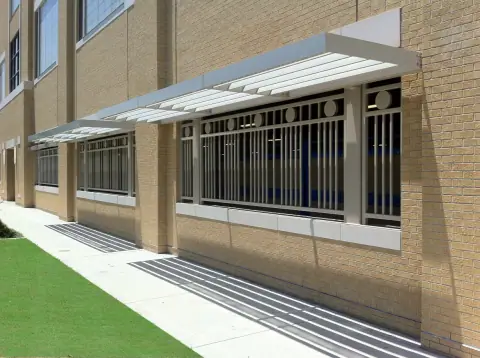
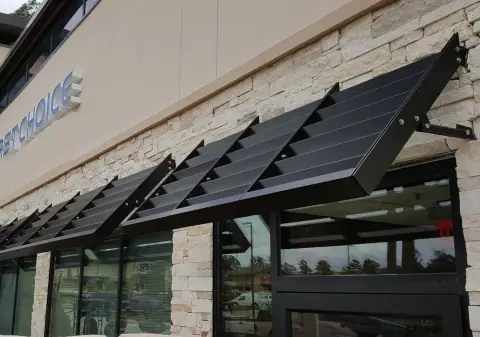
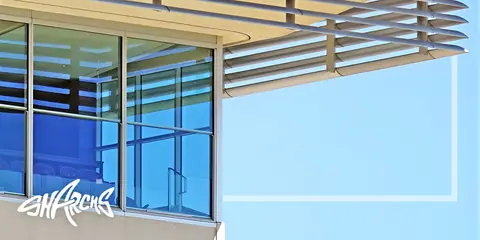
Cantilevered aluminum sunshades provide doorways and windows respite from the hot rays while eliminating hanger supports for maximum application flexibility. Transform the building’s exterior by choosing different louver blades or an airfoil sunshade style. Our aluminum sunshade system is designed to enhance your building’s aesthetic and functionality.
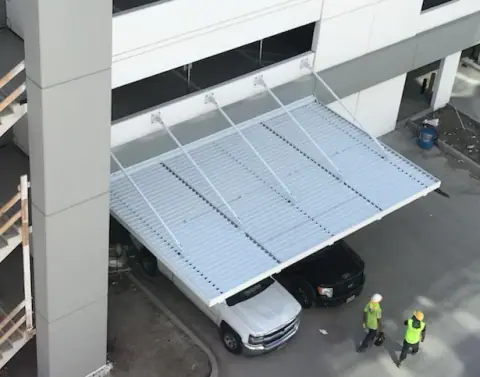
Hanger Rod Support Aluminum Sunshades
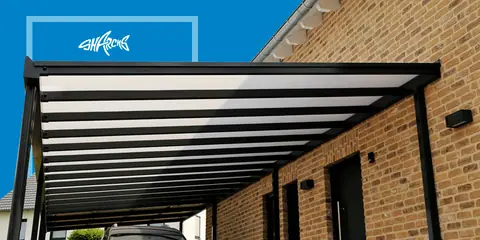
Architectural sunshades with hanger rod suspension provide visually appealing coverage to your entryway. Choose from various finishing options that blend seamlessly with many building styles. You can also opt for a bolder look to capture attention and support your company’s branding. Our exterior aluminum sunshade overhangs offer both style and performance.
Custom Aluminum Sunshades
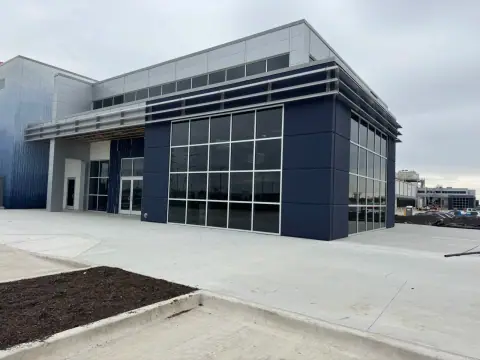
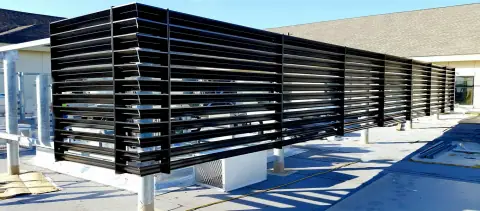
Some projects call for a solution that’s anything but standard. Whether you have a wrap-around application or you want to change features to make an architectural statement, we can help. Our team has the design and engineering expertise to create a unique aluminum sunshade that meets your needs and exceeds your expectations. We specialize in aluminum sun shading systems for architects looking for bespoke solutions.
Vertical Aluminum Sunshades
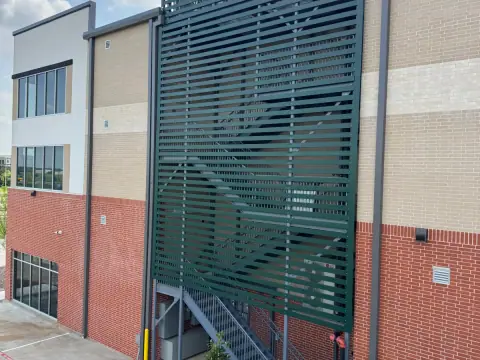
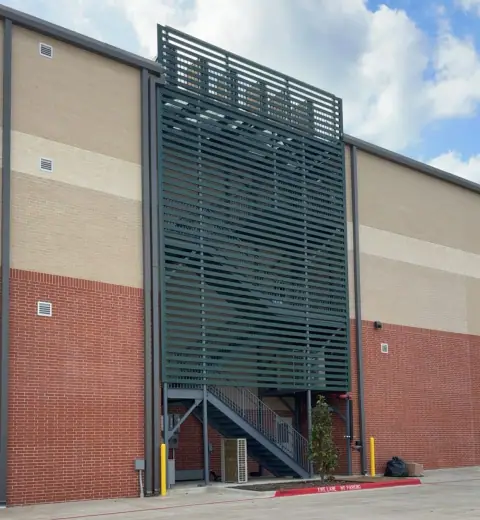
Our vertical aluminum sunshades are growing in popularity thanks to their clean lines and modern look. Choose from straight or tilted blade profiles that follow your structure’s contours. Our team can also create these shade solutions with perforations for precise sun control in your setting. Our aluminum sun shading systems for architects offer innovative designs and optimal sun control.
Last updated
Aluminum Sunshades: FAQs
How do exterior sunshades improve commercial building energy efficiency?
Exterior sunshades block direct solar radiation before it penetrates the window glass. By preventing solar heat gain, sunshades reduce internal cooling loads during peak summer months, allowing HVAC systems to operate more efficiently and lowering utility costs.
What is the difference between an airfoil sunshade and a standard louvered sunshade?
Airfoil sunshades feature smooth, blade-shaped louvers inspired by airplane wings that optimize airflow and modern aesthetics. Standard louvered sunshades utilize traditional flat, tube, or Z-blade profiles to prioritize shade density or custom structural styling.
Can Sharchs aluminum sunshades withstand high wind loads?
Yes. Sharchs engineers every custom sunshade system to meet or exceed local building codes for wind load, snow load, and structural attachment specifications. Detailed engineering calculations and shop drawings are available for job-site approvals.
How are aluminum sunshades installed on commercial curtain walls?
Sunshades are typically anchored directly to the building’s structural steel, concrete, or curtain wall mullions using custom mounting brackets, knife plates, or tie-rod supports designed specifically for the building envelope.
What is the standard lead time for custom aluminum sunshades from Sharchs?
Sharchs manufactures and delivers custom aluminum sunshades in an industry-leading turnaround time of 8 to 10 weeks following final shop drawing approval.
Do aluminum sunshades really reduce cooling costs?
Yes. Stopping solar heat outside the glass lowers the cooling load on the HVAC system. The actual savings depend on climate, glazing type, building orientation, and shading design, so a shading analysis for your specific facade gives the most accurate estimate.
Which facades benefit most from sunshades?
South- and west-facing facades typically see the most solar heat gain and benefit most. Horizontal louvers suit south-facing elevations, and vertical fins suit east and west elevations, where the sun is lower.
How long does it take to get custom aluminum sunshades?
Sharchs’ typical lead time is 8 to 10 weeks, depending on project scope and complexity.
Why is exterior facade shading more effective than interior window blinds?
Exterior shading devices block solar radiation before it hits the glass, preventing heat from entering the building envelope. Interior blinds trap heat after it has already passed through the glazing, forcing the mechanical system to cool an already warmed interior.
How do aluminum facade shade systems handle severe weather?
Commercial aluminum shade solutions are engineered from commercial-grade extruded aluminum to meet local building codes, including high wind uplift, snow accumulation, and regional seismic requirements.