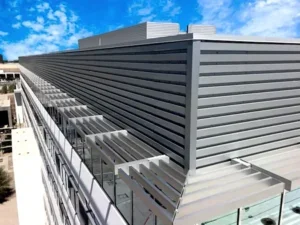

How Aluminum Architectural Louvers Combine Performance and Design in Commercial Construction
Modern commercial buildings must accomplish much more than simply providing usable space. Architects and developers are challenged to create structures that are visually appealing, energy efficient, and capable of supporting complex mechanical systems. One architectural component that plays a significant role in achieving these goals is the use of aluminum architectural louvers.
Often integrated into building facades, mechanical rooms, parking structures, and equipment enclosures, architectural louvers provide essential ventilation while contributing to the overall appearance of a building. Their ability to blend functionality with design has made them a popular choice across a wide range of commercial construction projects.
The Important Role of Ventilation in Commercial Buildings
Every commercial property requires proper airflow to support mechanical equipment and maintain healthy building operations. HVAC systems, generators, electrical rooms, and other critical infrastructure depend on adequate ventilation to perform efficiently and safely.
Aluminum architectural louvers allow air to move freely through designated openings while helping to control the intrusion of rain, debris, and unwanted elements. This balance is critical for maintaining equipment performance without compromising the integrity of the building envelope.
By supporting airflow in key areas, louvers contribute to the overall functionality and reliability of modern commercial facilities.
Enhancing Building Appearance Through Thoughtful Design
Architectural features are no longer expected to be purely functional. Today’s building owners and designers seek solutions that enhance visual appeal while meeting operational requirements.
Aluminum architectural louvers can be customized to complement virtually any architectural style. Rather than appearing as an industrial necessity, they can become an integrated design element that contributes to the building’s aesthetic character.
Architects frequently use louvers to create visual rhythm across a facade, conceal mechanical systems, and maintain a consistent appearance throughout a project. With a variety of blade styles, finishes, and configurations available, louvers can be tailored to support both contemporary and traditional designs.
Concealing Mechanical Equipment Without Sacrificing Performance
Mechanical equipment is essential to commercial operations, but it is rarely something building owners want prominently displayed. Rooftop units, generators, cooling systems, and utility equipment can detract from an otherwise attractive building design.
Aluminum architectural louvers offer an effective solution by screening these systems from view while preserving the airflow necessary for proper operation. This allows architects to maintain clean sightlines and polished building exteriors without interfering with equipment performance.
The result is a more professional and cohesive appearance that benefits both property owners and occupants.
Why Aluminum Is Ideal for Architectural Louvers
Exterior building products must be able to withstand years of environmental exposure while maintaining their appearance and functionality. Aluminum has become one of the most trusted materials in commercial construction because of its durability and resistance to corrosion.
Unlike materials that may rust, crack, or deteriorate over time, aluminum performs exceptionally well in demanding conditions. It remains stable through changing temperatures, precipitation, and prolonged UV exposure, making it a dependable choice for projects across diverse climates.
Additionally, aluminum’s lightweight properties provide greater design flexibility while reducing structural demands on the building.
Supporting Sustainable Building Design
Sustainability continues to influence commercial construction decisions throughout the industry. Building owners are increasingly seeking solutions that contribute to energy efficiency and long-term environmental performance.
Aluminum architectural louvers can support these objectives by helping regulate airflow and contributing to efficient building operation. Many aluminum products are also manufactured using recyclable materials, aligning with broader sustainability initiatives within the construction industry.
When incorporated into a well-designed building envelope strategy, louvers can play an important role in supporting modern performance standards.
Applications Across Commercial Industries
The versatility of aluminum architectural louvers makes them suitable for a wide range of applications. Office buildings use them to conceal rooftop equipment and ventilate mechanical rooms. Healthcare facilities rely on them to support critical building systems while maintaining a professional appearance. Educational campuses, government buildings, hospitality properties, and industrial facilities all benefit from the combination of performance and aesthetics that louvers provide.
Their adaptability allows architects and contractors to solve functional challenges without compromising the overall design vision of the project.
Choose Sharchs for Custom Aluminum Architectural Louvers
Sharchs designs and manufactures custom aluminum architectural louvers for commercial projects throughout the United States. Our team works closely with architects, contractors, and building owners to create louver systems that provide dependable ventilation, conceal mechanical equipment, and enhance building aesthetics. With expert engineering, custom fabrication, and American-made quality, Sharchs delivers architectural solutions built for long-term performance.